M&I-400 - Mechatronics and Industry 4.0

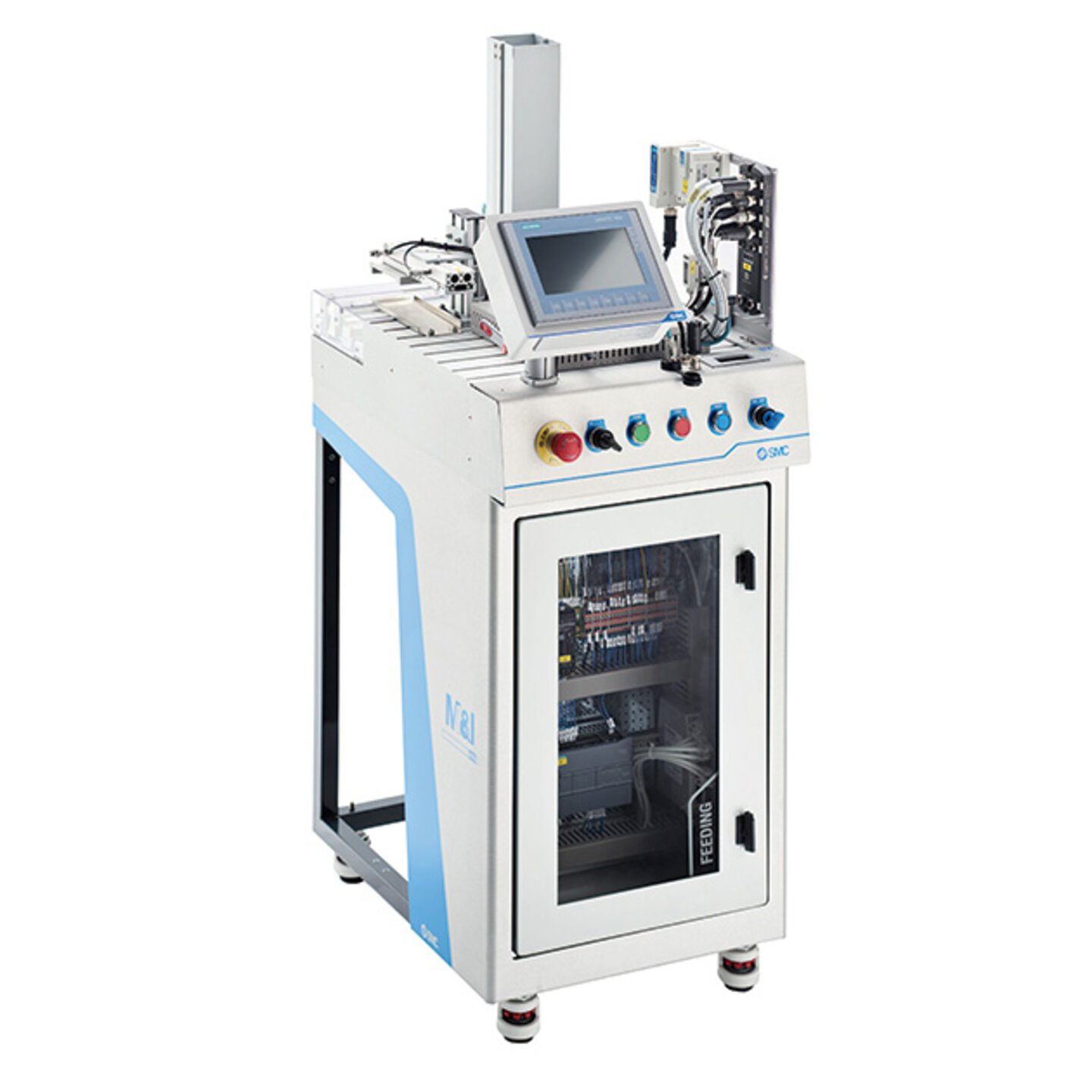
M&I-400 - A learning system designed to help technology instructors who are looking for innovative formulas to help their students to develop skills and get used to the most sought after mechatronics and industry 4.0 technologies.

How does M&I-400 work?

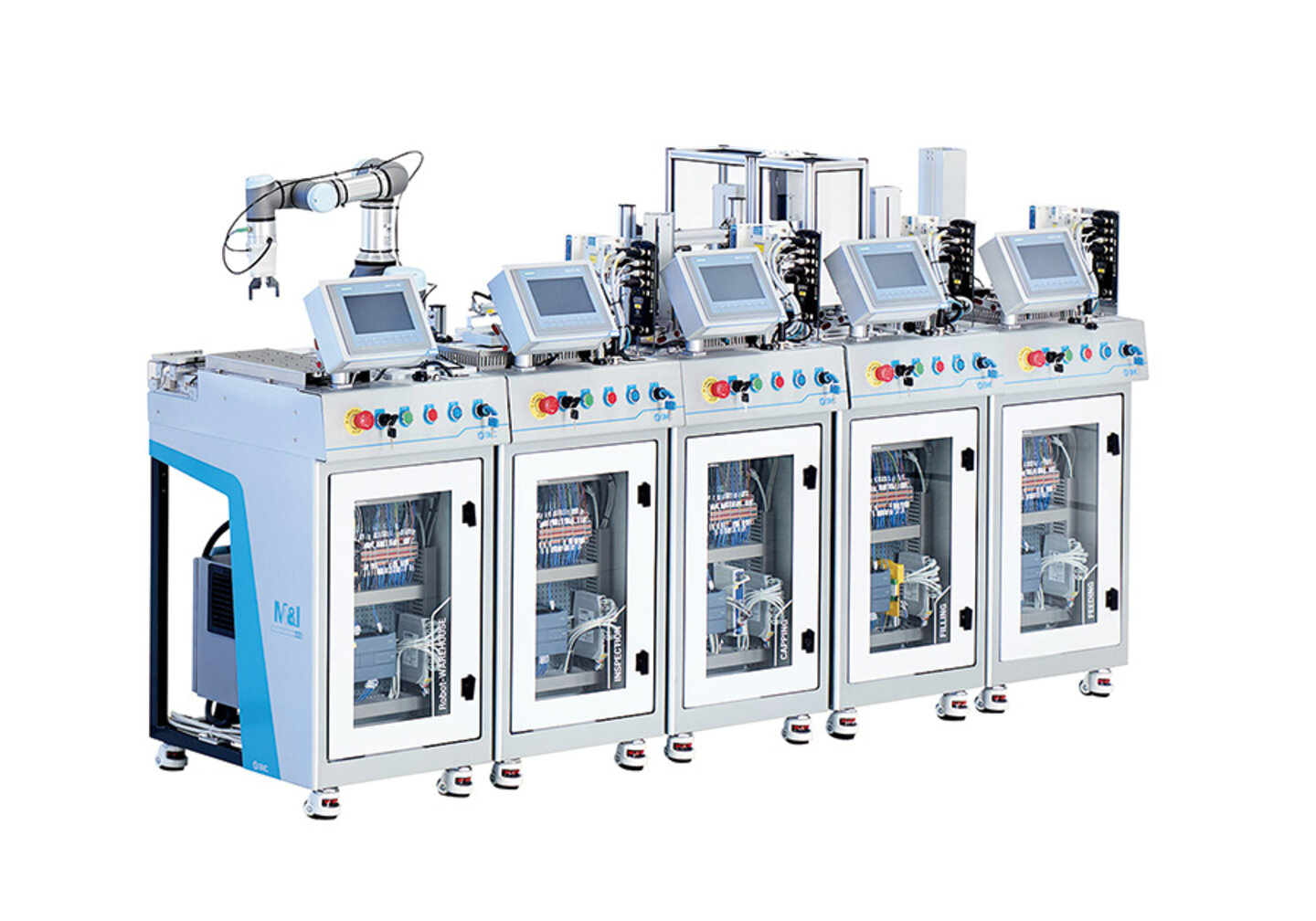
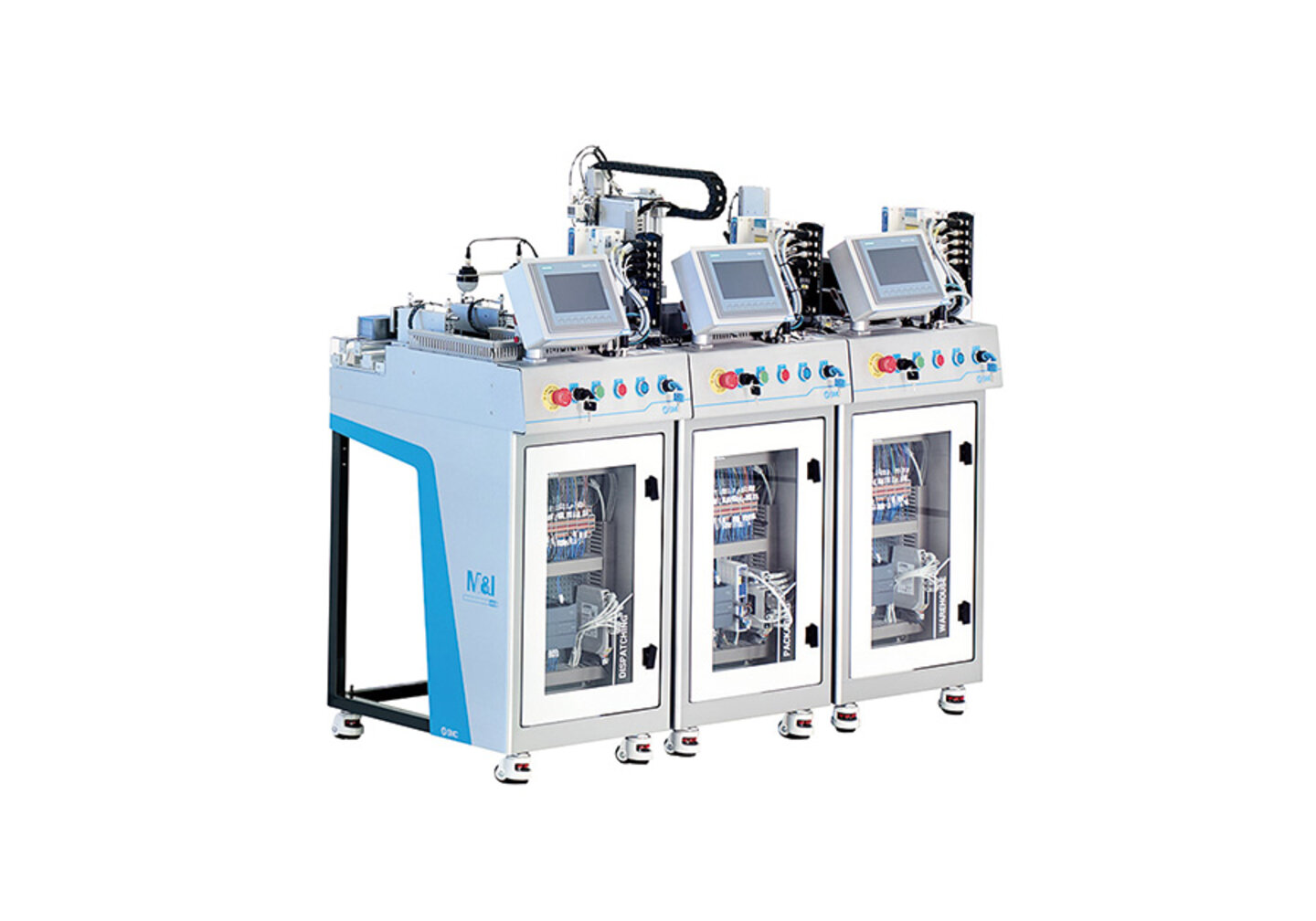
M&I-400 emulates a highly automated factory, where different types of products are produced, packed and shipped. The M&I-400 training system makes it possible to work on advanced and connected manufacturing concepts. This training equipment makes it possible to carry out projects and activities that motivate students during their practical classes due to the relevance of the integrated industrial components and its attractive design. The M&I-400 training equipment offers a professional training experience that matches the industrial reality, where all the components are of standardised use in the industry. What's more, it's a flexible system that allows the user to customise certain parameters, such as the range of controller used.

M&I-400 - Mechatronics and Industry 4.0

M&I-400 - A learning system designed to help technology instructors who are looking for innovative formulas to help their students to develop skills and get used to the most sought after mechatronics and industry 4.0 technologies.

Different configurations

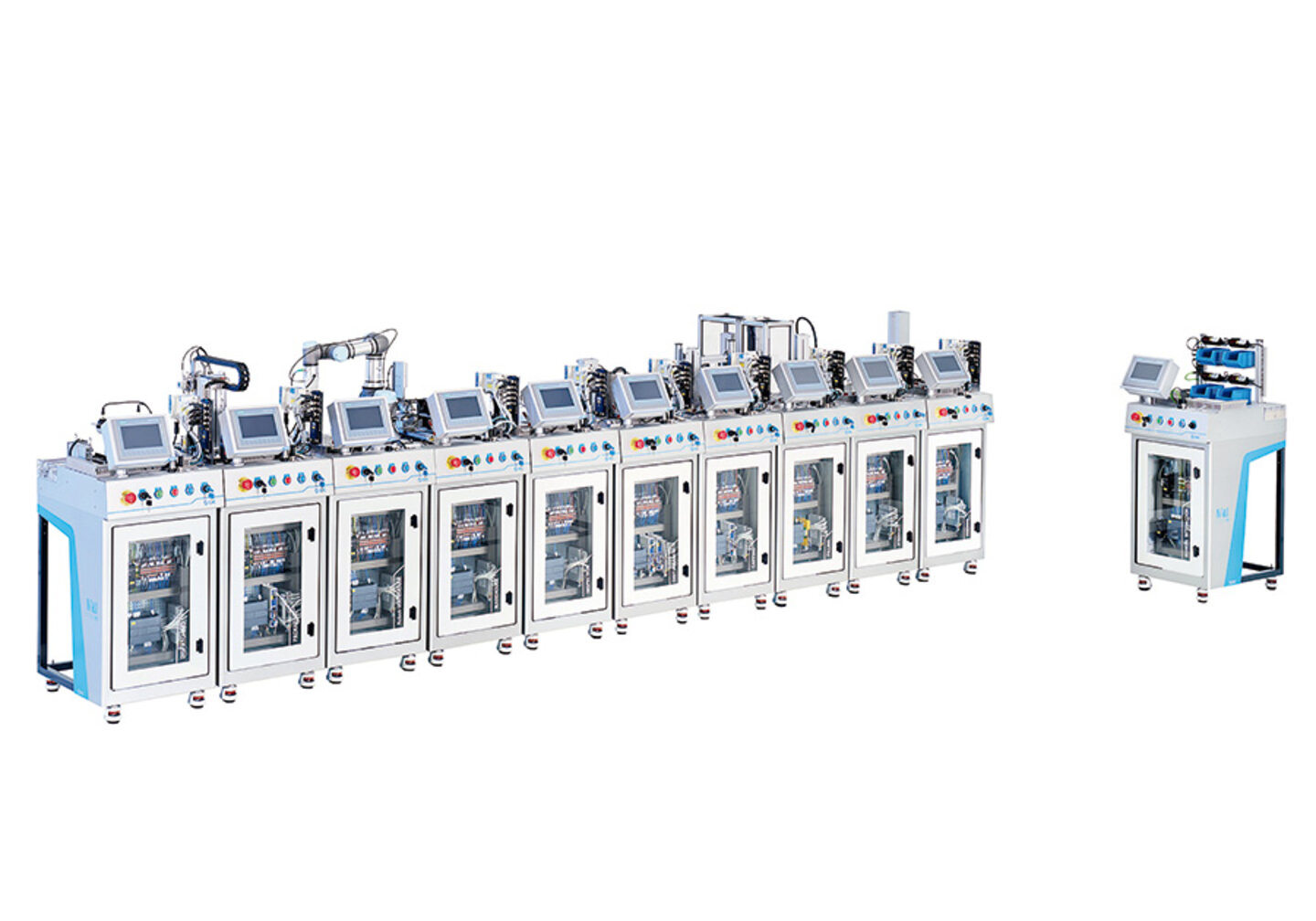
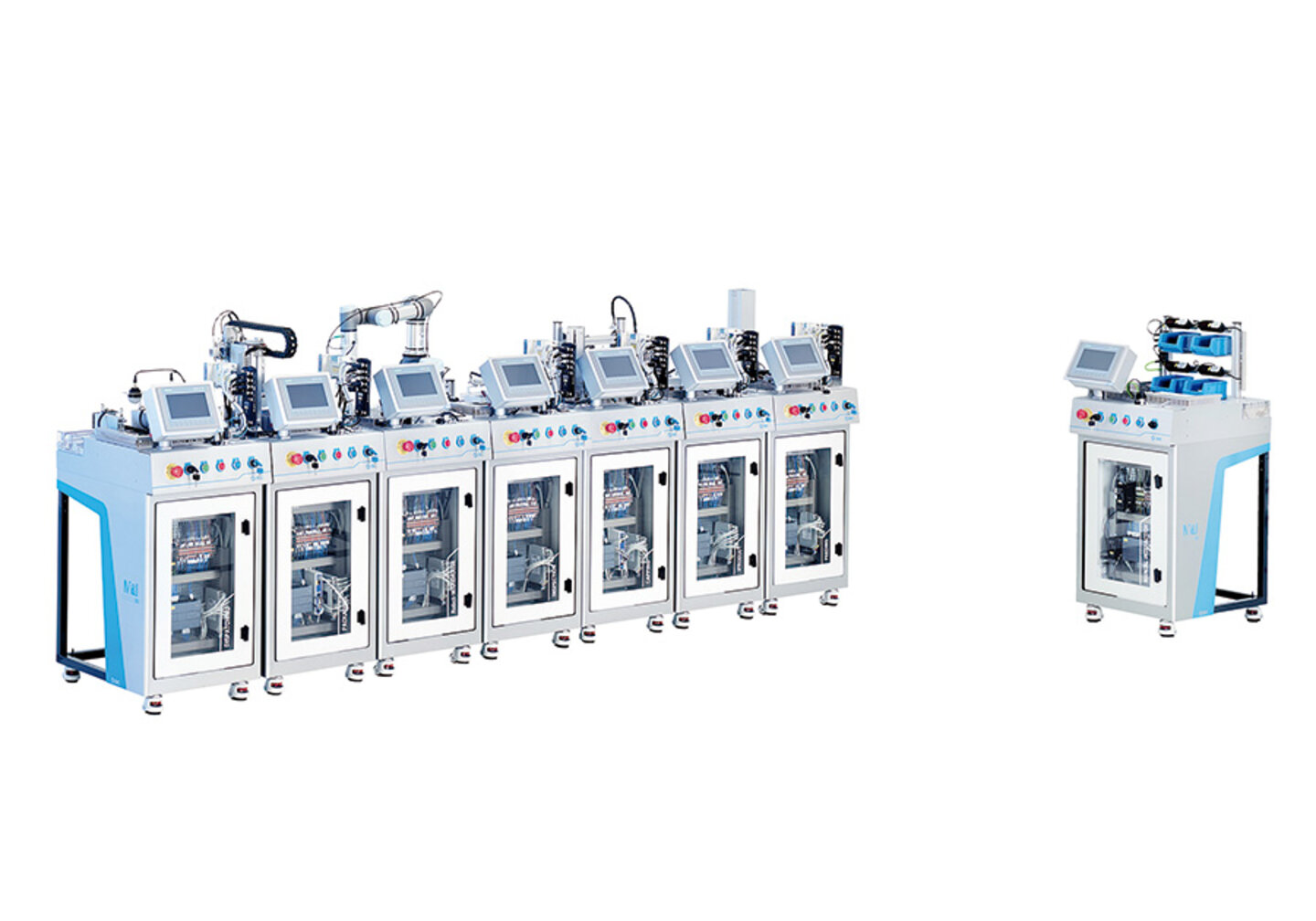
Its modular nature allows the user to configure the system that best suits their needs, also enabling staggered growth over time. Starting from an initial basic configuration, a subsequent expansion is possible, adding new work stations and, therefore, new technologies. The modularity and flexibility of the M&I-400 training system allows multiple configurations, from a minimum of 2 stations, to the complete system of 11 stations. These are some of the configurations suggested.

Technologies

The M&I-400 stations have a new and attractive design. It's a compact design that makes it possible to integrate a larger number of technologies into less space.
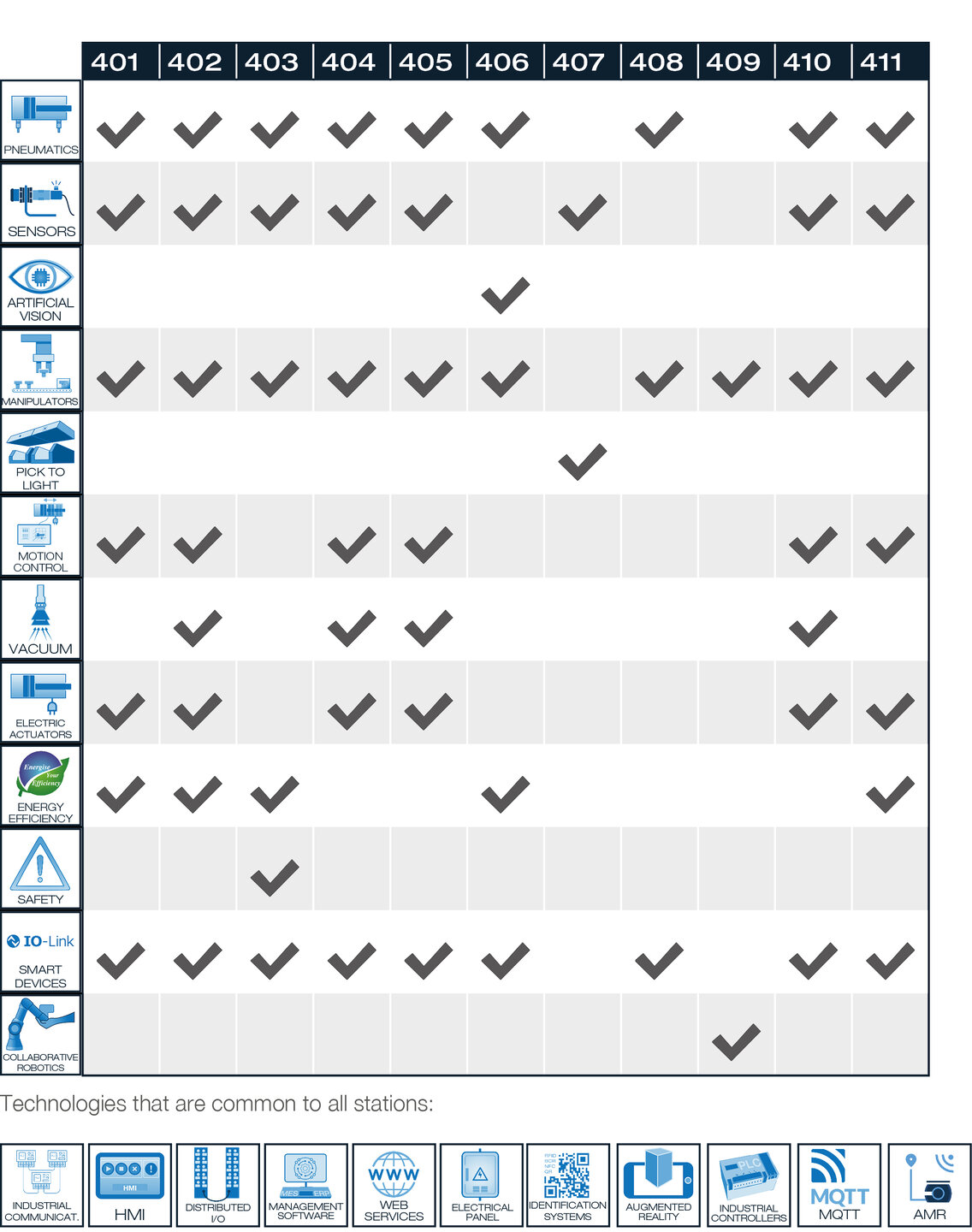
The M&I-400 system includes the following technologies per station, some of which are common to all stations.
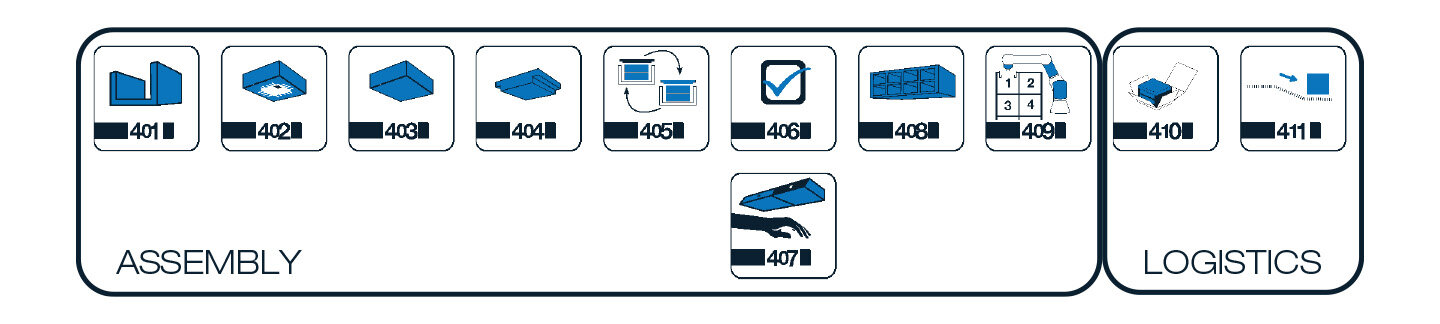
Table of M&I-400 technologies with icons and distribution by stations
Pneumatics

Pneumatics

Set of systems and techniques that use compressed air to generate, transmit, and control energy within an automated process. It includes components such as compressors, valves, actuators, and maintenance units that enable driving, regulating, and sequencing movements, ensuring efficiency, reliability, and safety in the execution of industrial tasks.

Sensors

Sensors

Set of devices designed to detect and measure physical or chemical variables within an automated process, transforming them into signals that can be interpreted by control systems. It includes sensors for position, proximity, temperature, pressure, or flow, enabling the acquisition of process status information and facilitating its monitoring, control, and optimization.

Artificial vision

Artificial Vision

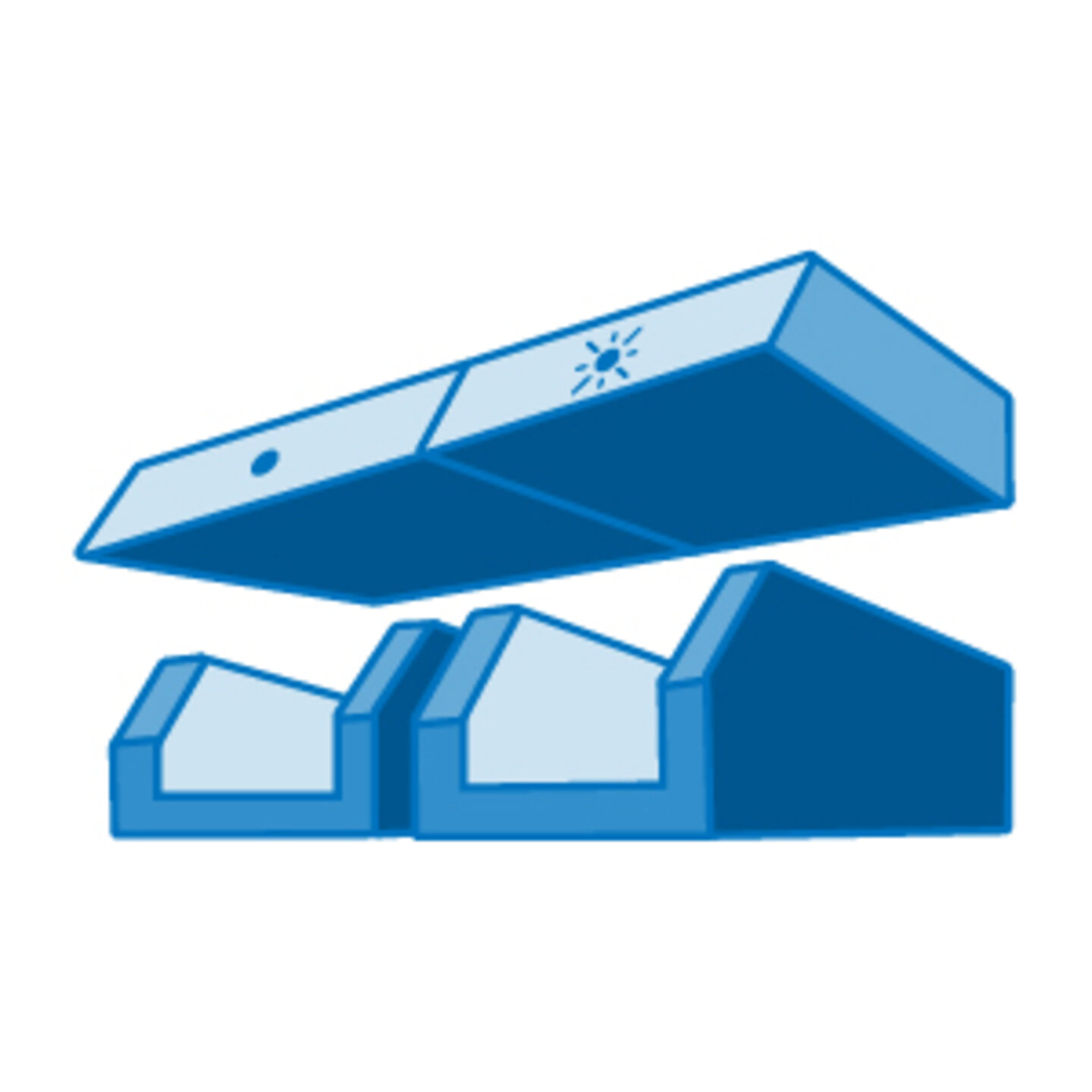
Set of systems and techniques that enable the capture, processing, and analysis of images to extract relevant information within an automated process. It integrates cameras, sensors, lighting, and processing software that allow inspection, identification, and control of objects, improving quality, precision, and efficiency in industrial applications.

Manipulator

Manipulator

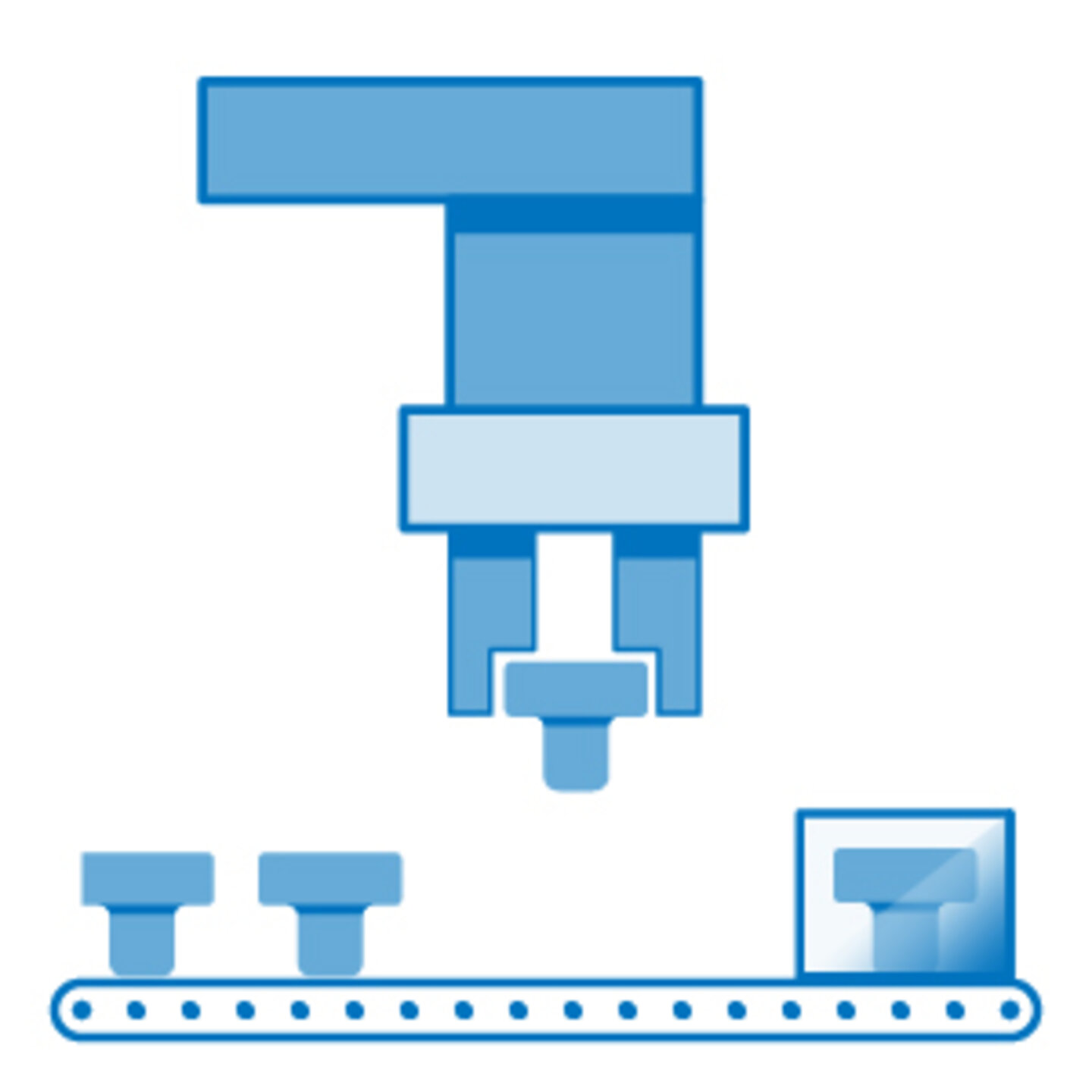
Set of mechanical devices designed to move, position, and manipulate parts or tools within an automated process. These systems, which can be manual, assisted, or robotic, make it possible to carry out tasks such as transport, assembly, loading and unloading, or packaging, improving process precision, repeatability, and efficiency, while reducing human effort and increasing productivity.

Pick to light

Pick to Light

It is a warehouse management system that uses a light source to warn the employee about the situation of the storable object. Suitable for optimizing shipments and collections in warehouses.

Motion control

Motion control

Set of systems and techniques responsible for regulating and coordinating the displacement, speed, position, and acceleration of moving elements within an automated process. It is based on the integration of devices such as motors, drives, sensors, and controllers, enabling the execution of precise, synchronized, and repeatable movements, optimizing performance, process quality, and system efficiency.

Electric actuators

Electric Actuators

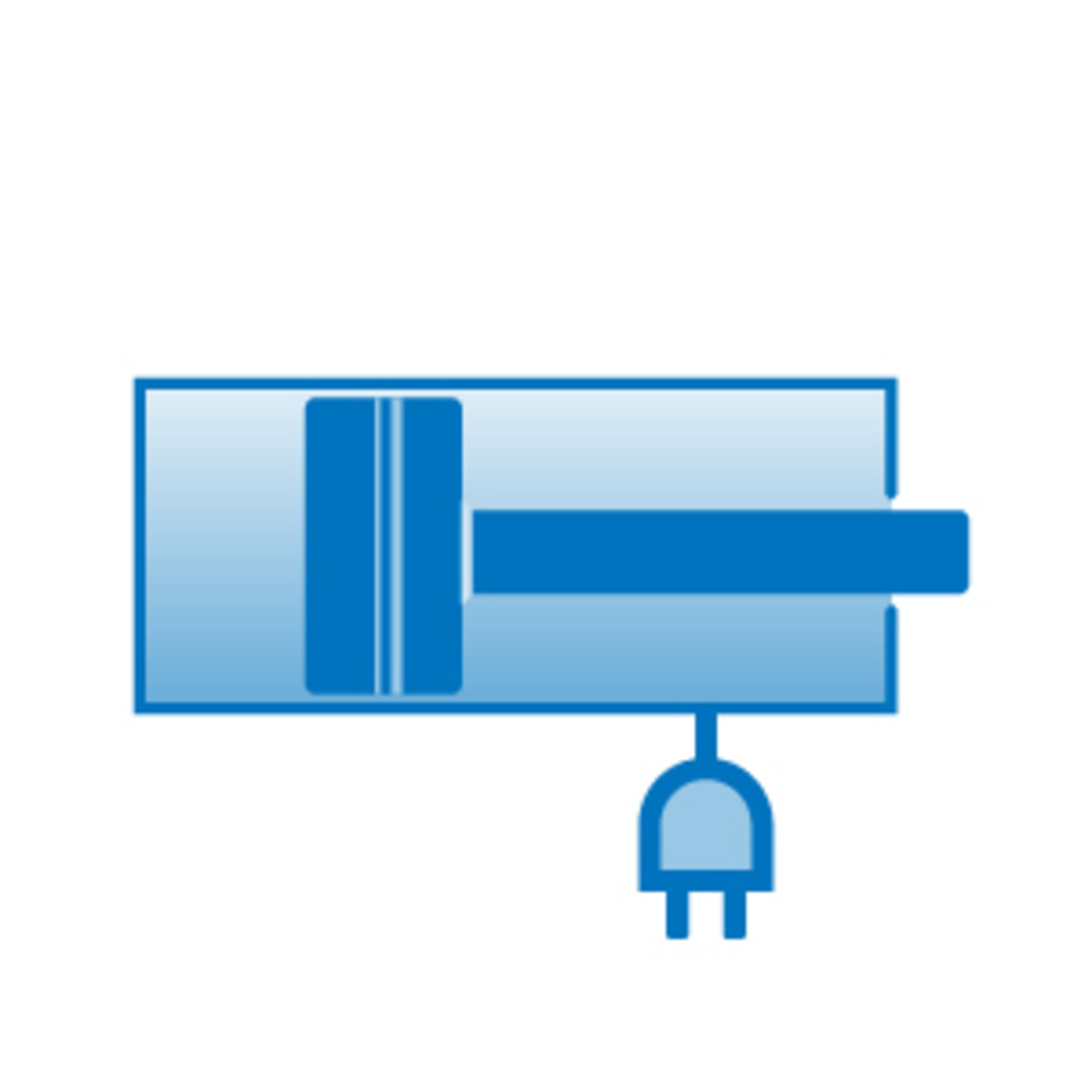
Set of devices responsible for converting electrical energy into motion or mechanical action within an automated process. It includes elements such as electric cylinders, linear actuators, or controlled motors that enable precise and controlled movements, facilitating task automation and improving system efficiency, flexibility, and reliability.

Energy efficiency

Energy Efficiency

The ability of a system to optimize the use of the energy required to carry out a process, minimizing losses and reducing consumption without affecting performance, quality, or safety. It is based on the application of technologies and control strategies that make it possible to adjust the energy used to the actual needs of the process, helping to improve sustainability, reduce operating costs, and increase industrial competitiveness.

Safety

Safety

These technologies not only prevent accidents and protect workers, but also optimize production processes, reducing downtime and costs associated with incidents. The protection of machinery and the implementation of guards and physical barriers have become essential elements.

Smart devices

Smart Devices

Set of smart field devices based on IO-Link communication, designed to exchange data bidirectionally with control systems within an automated process. They enable real-time parameterization, monitoring, and diagnostics of sensors and actuators, facilitating integration, flexibility, and advanced maintenance in industrial environments.

Collaborative robots

Collaborative Robots

Set of industrial robots designed to safely and directly interact with humans within a shared workspace. They integrate advanced control systems, sensors, and safety features that enable tasks to be performed in a flexible, precise, and collaborative manner, improving productivity, ergonomics, and safety in automated processes.

Industrial communication

Industrial Communications

Industrial communication refers to a data transmission system designed to enable communication between field devices, such as sensors, actuators, and controllers, and the monitoring and control systems in industry.

HMI

HMI

The space where interactions between humans and machines occur. The goal of this interaction is to allow effective operation and control of the machine from the human end, while the machine simultaneously feeds back information that aids the operators' decision-making process.

Distributed I/O

Distributed I-O

Distributed I/O is a system architecture that distributes input/output modules near various field devices and connects them to a central controller (such as PLC or DCS) through a network. Unlike traditional centralized I/O systems, distributed I/O systems distribute I/O functions to various nodes and realize data transmission and control through industrial Ethernet, fieldbus or wireless communication.

Industrial management system

Industrial Management System

Set of systems and tools aimed at planning, monitoring, and optimizing processes and resources within an industrial environment. It integrates control, information, and communication technologies that enable the management of production, maintenance, quality, and operational efficiency, facilitating decision-making and continuous improvement in automated systems.

Electrical panel

Distribution Panel

Set of electrical systems and components arranged within an enclosure or cabinet, intended for the distribution, protection, and control of electrical energy within an automated process. It includes elements such as switches, protective devices, contactors, relays, terminals, and control devices that enable the safe and efficient operation of machines and industrial systems.

Identification systems

Identification Systems

Industrial coding is the process by which a unique identifier is assigned to each piece of equipment, product, item or system within a company. Industrial labels and other elements such as cards or signs offer a fast and reliable solution for the identification of equipment and facilities. They are systems such as RFID, BCR, NFC and QR.

Programmable controllers

Programmable Controlers

Programmable Logic controller (PLC) technology refers to the use of programmable industrial electronic devices designed to automate and control processes and machines, executing logical, sequential and timed instructions from sensor inputs and reliably generating control outputs in industrial environments.

MQTT

MQTT

Lightweight communication protocol based on the publish/subscribe model, designed for the efficient exchange of data between devices and systems. It enables the transmission of information in real time between equipment, sensors, and control platforms, even in networks with limited bandwidth, facilitating system integration, industrial IoT connectivity, and remote process monitoring.

Augmented reality

Augmented Reality

A set of technologies that allow a user to observe the real world with virtual graphical information added by means of a technological device. In this way, tangible physical elements are combined with virtual elements, thus creating an augmented reality in real time.

Vacuum

Vacuum

Set of systems and techniques that use vacuum as a means to handle, hold, and transport objects within an automated process. It includes components such as vacuum generators, suction cups, valves, and sensors that enable safe, precise, and efficient handling operations, especially in pick-and-place, packaging, and material handling applications, improving productivity and process reliability.

Web services

Web Services

A web service is a technology that uses a set of protocols and standards that serve to exchange data between applications. Different software applications developed in different programming languages, and running on any platform, can use web services to exchange data on computer networks such as the Internet.

Autonomous mobile robot

AMR

Set of autonomous mobile robots designed to move and perform transport and logistics tasks within an automated environment without the need for fixed infrastructure. They integrate sensors, navigation, and control systems that allow them to move safely, adapt to the environment, and collaborate with other systems, improving efficiency, flexibility, and productivity in industrial processes.

Management software M&I-MES

This allows the user to control and manage the M&I-400 system, storing and monitoring all process data. It is structured in four blocks: management, movement, supervision and administration.

Stations

M&I-400 is composed of up to 11 independent stations with integrated control.
The production, packaging and dispatch of different types of products are carried out at the different processing stations. All managed using an M.E.S. system.
Each of the M&I-400 system stations carries out a different part of the process.
M&I-401 station of the M&I-400 training system

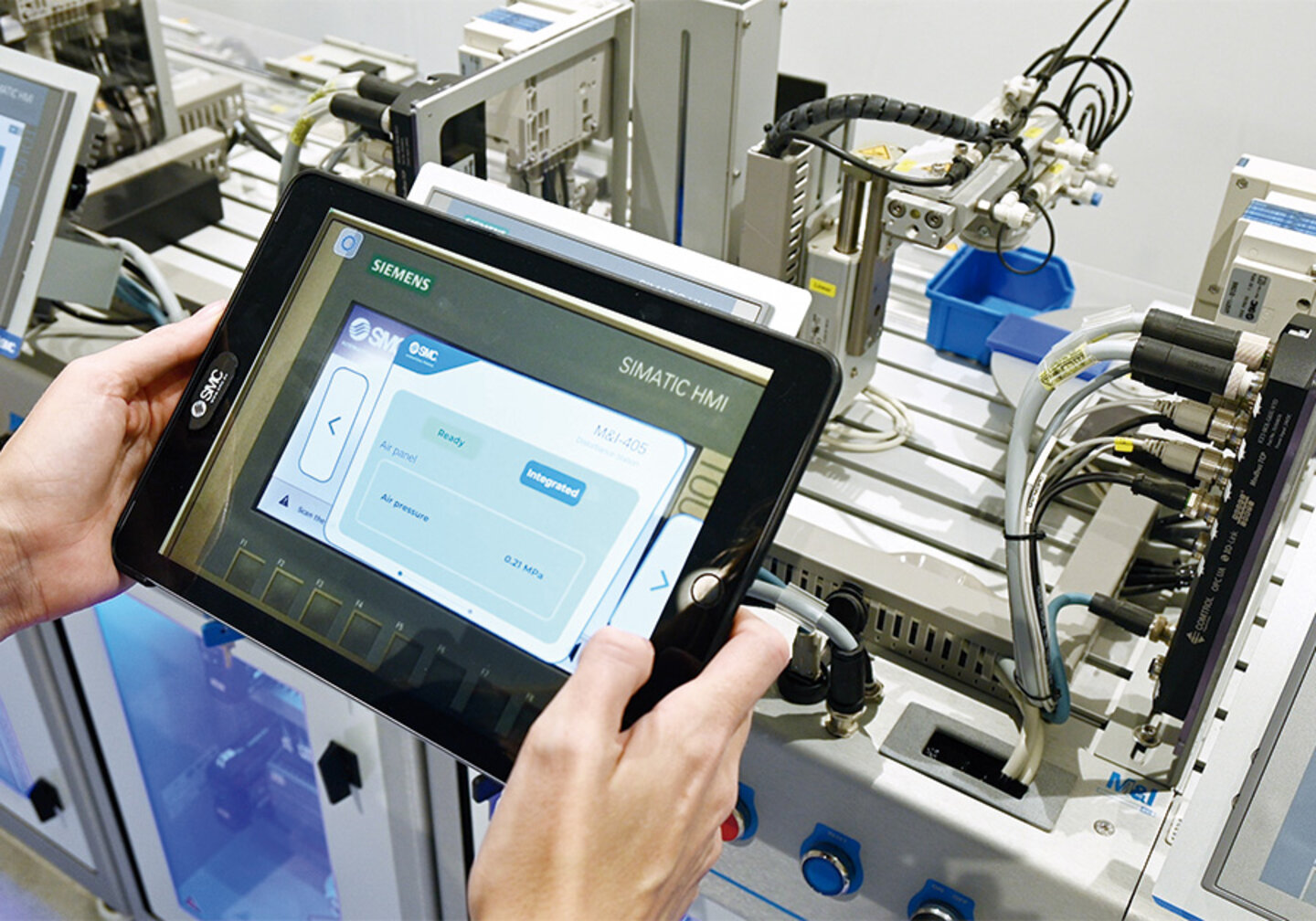
SMC AR Viewer - Augmented reality in M&I-400

The augmented reality software is an application that facilitates the visualisation of information from the physical system to which it is associated, enabling real-time interaction by combining elements of the real and virtual world. The operability of this software application is based on the implementation of strategically placed markers at each station of the physical equipment, which act as links to additional information for users. This technology is included in all stations of the M&I-400 system.
Tablet using the SMC AR Viewer augmented reality application on the M&I-400 system

Conceptual distribution

The M&I-400 training equipment has two work areas, the assembly area and the logistics area.
- **ASSEMBLY**: The assembly process is made up of 9 sequential stations. During this process, the container is supplied, as well as the different fillings, smart or basic. As well as this, the capping, quality inspection and storage of the product takes place.
- **LOGISTICS**: The logistics block is made up of 2 stations, also sequential, the packing station and the dispatch station. In this part of the process, the products can be packed in secondary packaging and then dispatched along the different ramps.

Infographic of the M&I-400 system layout with assembly and logistics stations
M&I-400 station icons indicating possible starting stations

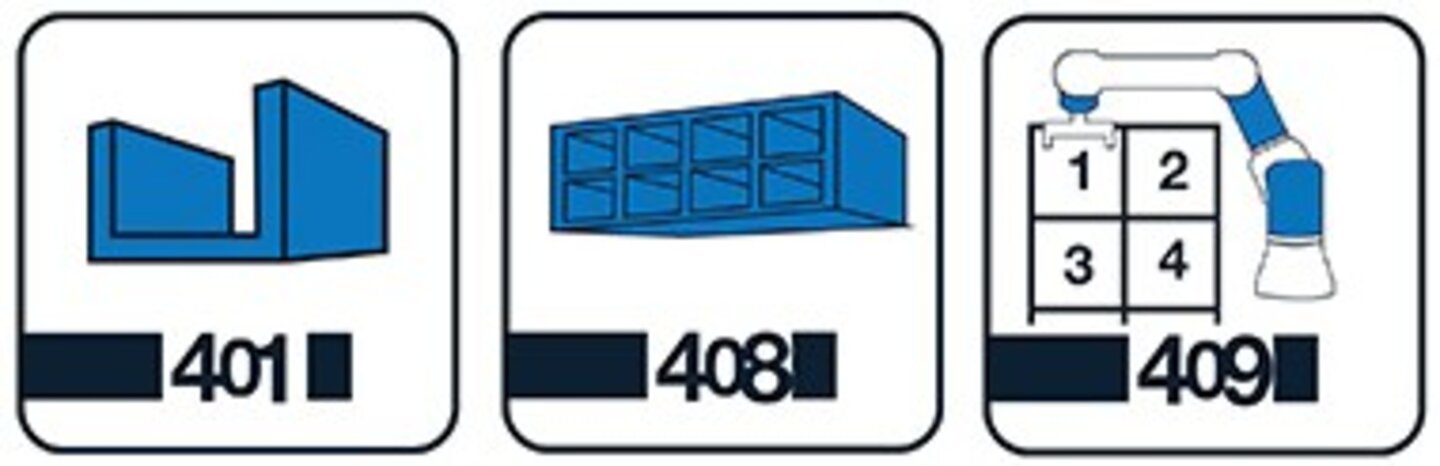
Possible STARTING stations

There must be ONE station with WiFi AP & Server in an M&I-400 system. It’s a good idea to make it the first in the configuration.
M&I-400 station icons indicating possible end stations

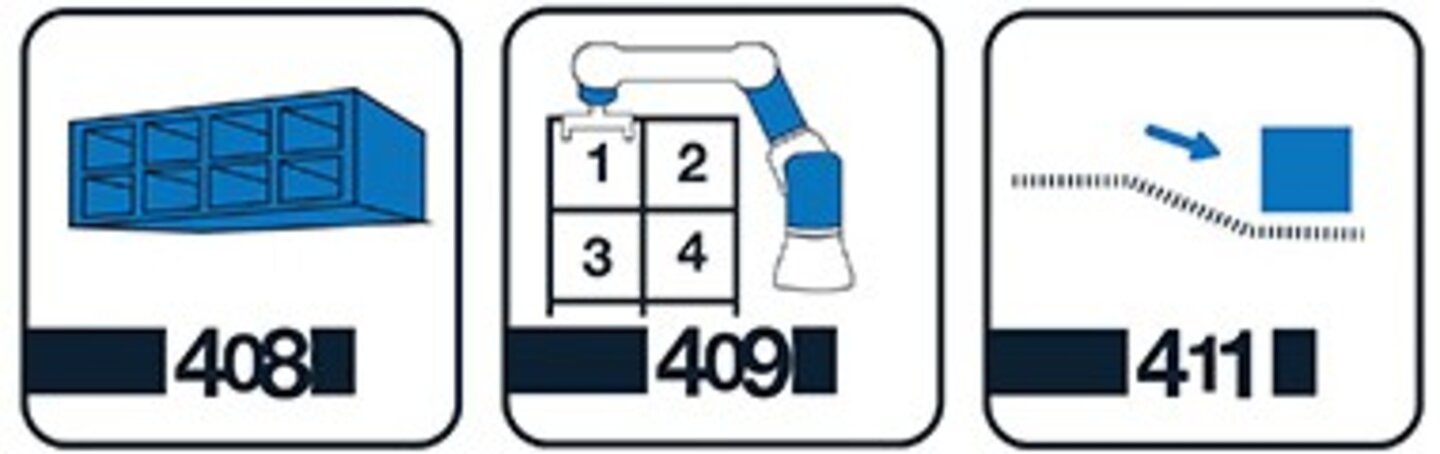
Possible END stations

It is recommended to choose one of these stations as the end of the configuration.
Icon of the M&I-407 station of the M&I-400 training system

Independent station

The M&I-407 station is an independent station: It does not include a conveying system and the transfer is manual. However, it requires the M&I-406 station for its operation.
HMI icon of the M&I-400 training system

Combination of HMI-PLC models

It is not possible to combine HMI standard with PLC Siemens S7-1500 neither combining HMI advanced with PLC Siemens S7-1200

Optionals

M&I-400 has a series of optional add-ons.

Manufactured product

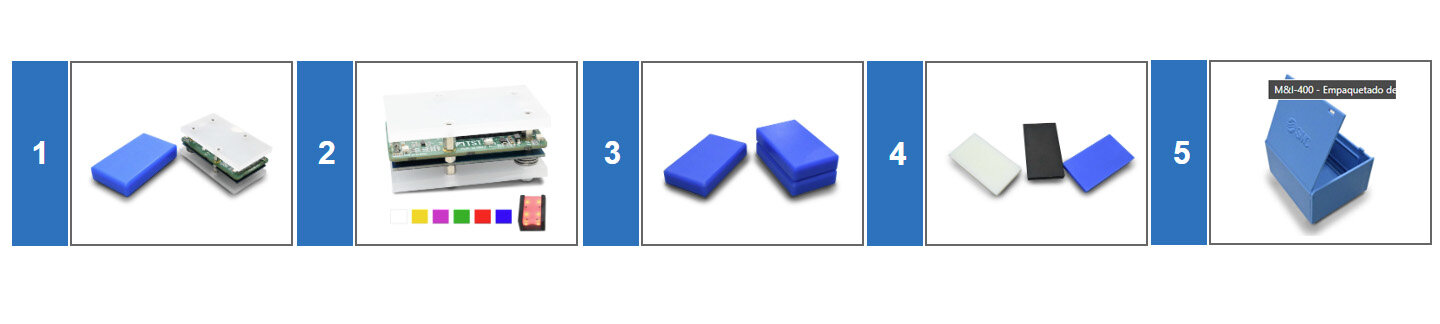
The M&I-400 training equipment makes it possible to carry out multiple product configurations:
- (1) Content type: smart (iProduct) or basic.
- (2) Smart content settings: colour definition (6 options available).
- (3) Basic content settings: number of fillings to include (none, 1 or 2 heights).
- (4) Cap colour: white, blue, black or no cap.
- (5) Secondary packaging: Possibility of packing the product in a box.
Product configuration options manufactured by the M&I-400 training system

Product configurator

Do you want to request a quote on this product and get the specifications and technical descriptions of it? Configure your ideal system through our product configurator and get all the related information in just a couple of clicks.